Kussmaul Breathing in Metabolic Acidosis: Meaning, Symptoms, Causes Treatment Guide
Here is a **complete, concise-but-exhaustive medical reference** for **Kussmaul Breathing**, followed by a **high-ranking SEO title**.
---
# **Kussmaul Breathing – Definition, Causes, Clinical Features, Diagnosis & Management (Complete Medical Guide)**
---



---
## **1. Definition**
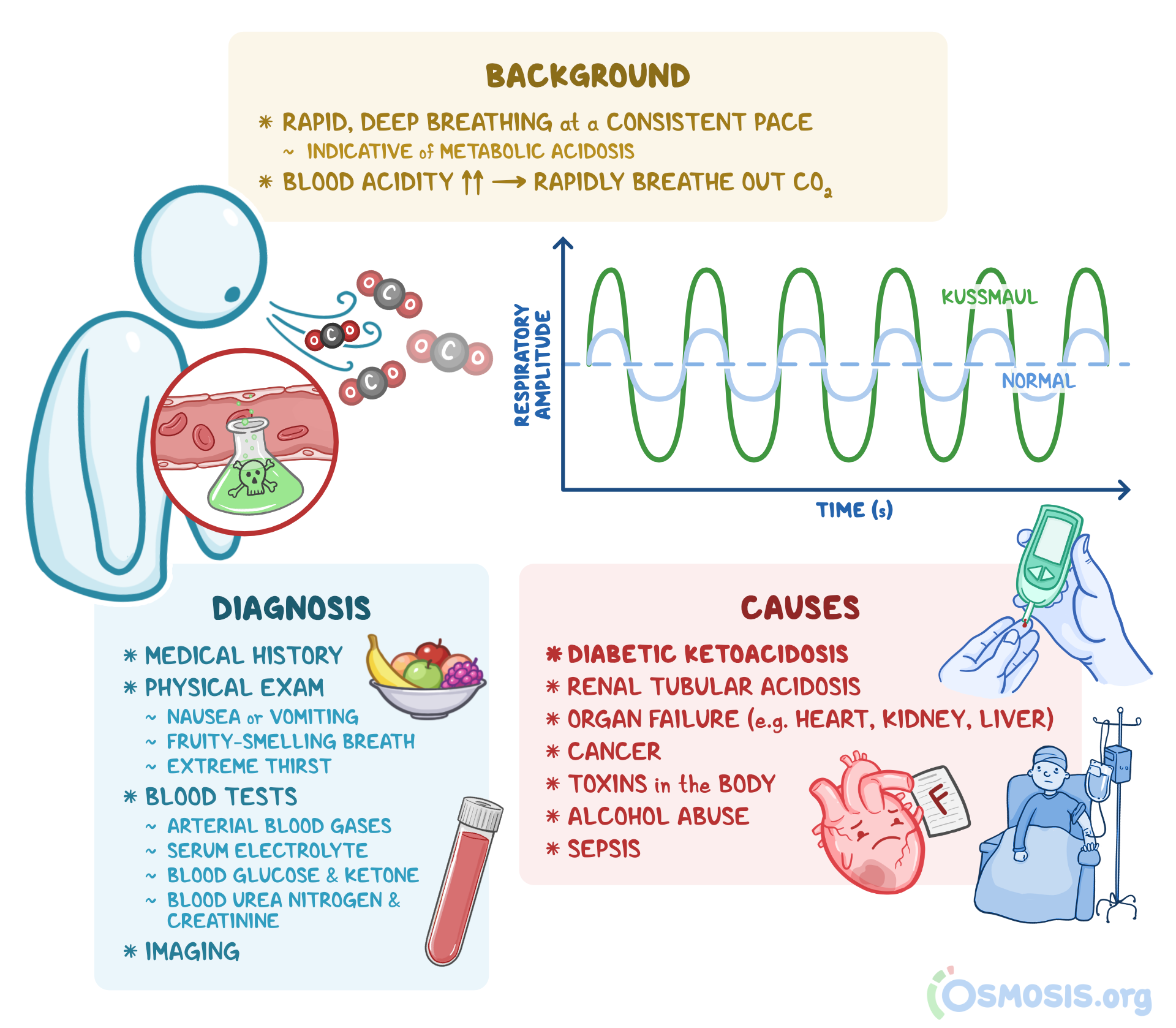
**Kussmaul breathing** is a **deep, labored, rapid respiratory pattern** seen in **severe metabolic acidosis**, especially **diabetic ketoacidosis (DKA)** and **advanced kidney failure**.
It is a compensatory mechanism to **blow off excess CO₂**, thereby reducing blood acidity.
---
## **2. Pathophysiology**
* ↓ pH (metabolic acidosis) → stimulates peripheral chemoreceptors (carotid bodies).
* Respiratory center ↑ ventilation to reduce PaCO₂ (respiratory compensation).
* Initially **rapid shallow breaths** → progress to **deep, labored, “air-hunger” breathing**.
* Maximum compensatory pattern is **Kussmaul breathing**, indicating **severe acidosis with high anion gap**.
---
## **3. Causes (Major Etiologies)**
### **A. Metabolic Causes**
* **Diabetic Ketoacidosis (DKA)** – *most common*
* **Uremic acidosis** due to **chronic kidney disease (CKD), acute kidney injury (AKI)**
* **Lactic acidosis** (shock, sepsis, hypoxia, mitochondrial disorders)
* **Toxic ingestions**:
* Methanol
* Ethylene glycol
* Salicylates (late stage)
* Paraldehyde
### **B. Others**
* Severe diarrhea (loss of bicarbonate)
* Starvation ketoacidosis
* Alcoholic ketoacidosis
---
## **4. Clinical Features**
### **Characteristic Breathing Pattern**
* Deep, “sighing,” labored respirations
* Rate: **>20–30 breaths/min**
* No periods of apnea (unlike Cheyne–Stokes)
### **Associated Symptoms from Underlying Cause**
**DKA:**
* Polyuria, polydipsia
* Fruity (acetone) breath
* Abdominal pain, vomiting
* Dehydration, altered sensorium
**Uremia:**
* Fatigue
* Nausea, pruritus
* Metallic taste
* Pericardial rub (pericarditis) in severe cases
---
## **5. Investigations & Diagnosis**
Kussmaul breathing itself is a clinical sign; → evaluate cause with:
### **A. Blood Investigations**
* **Arterial blood gas (ABG):**
* ↓ pH
* ↓ HCO₃⁻
* ↓ PaCO₂ (compensatory)
* **Serum ketones (β-hydroxybutyrate)**
* **Serum electrolytes:** Na⁺, K⁺, Cl⁻
* **Anion gap** = (Na⁺ + K⁺) – (Cl⁻ + HCO₃⁻) → **increased**
### **B. Additional Tests**
* Blood glucose (for DKA)
* Renal function tests: urea, creatinine
* Lactate levels
* Toxicology screening (methanol, ethylene glycol)
---
## **6. Differential Diagnosis (Other Abnormal Breathing Patterns)**
* **Cheyne–Stokes breathing** → waxing–waning with apnea
* **Hyperventilation syndrome** → rapid but not deep
* **Biot’s breathing** → irregular with apnea, brainstem injury
* **Gasping respiration** → agonal, terminal
---
## **7. Management**
🚨 *Kussmaul breathing signals severe acidosis—management targets the underlying cause.*
---
### **A. Diabetic Ketoacidosis (DKA)**
1. **Fluid therapy**
* 0.9% Normal saline bolus, followed by maintenance
2. **Insulin infusion**
* Regular insulin, titrate to reduce glucose 50–75 mg/dL/hr
3. **Potassium correction**
* Add K⁺ when <5.0 mEq/L and patient is passing urine
4. **Bicarbonate therapy**
* Only if **pH < 6.9**
5. **Monitor:** glucose, K⁺, ABG, urine output
### **B. Uremic Acidosis (Renal Failure)**
* **Emergency dialysis** when indicated (severe acidosis, hyperkalemia, fluid overload, uremic symptoms)
### **C. Lactic Acidosis**
* Treat underlying cause: sepsis, shock, hypoxia
* Oxygen therapy
* IV fluids
* Vasopressors if needed
* Correct hypoxia aggressively
### **D. Toxic Ingestions**
* **Methanol / Ethylene Glycol:**
* Fomepizole or ethanol
* Hemodialysis
* **Salicylates:**
* Alkalinization with IV sodium bicarbonate
* Hemodialysis in severe cases
---
## **8. Prognosis**
* Depends on the cause and how quickly metabolic acidosis is corrected.
* Presence of Kussmaul breathing generally indicates **severe disease** and need for **urgent treatment**.
---
# **SEO-Optimized Title**
**“Kussmaul Breathing: Definition, Causes, Diagnosis, Clinical Features & Management Explained (High-Yield Medical Notes)”**
---
If you'd like, I can also generate:
✅ **SEO description & keywords**
✅ **Exam-ready short notes**
✅ **Case-based MCQs**
✅ **HTML/CSS/JS interactive quiz**
---
# **Kussmaul Breathing – Definition, Causes, Clinical Features, Diagnosis & Management (Complete Medical Guide)**
---




---
## **1. Definition**
**Kussmaul breathing** is a **deep, labored, rapid respiratory pattern** seen in **severe metabolic acidosis**, especially **diabetic ketoacidosis (DKA)** and **advanced kidney failure**.
It is a compensatory mechanism to **blow off excess CO₂**, thereby reducing blood acidity.
---
## **2. Pathophysiology**
* ↓ pH (metabolic acidosis) → stimulates peripheral chemoreceptors (carotid bodies).
* Respiratory center ↑ ventilation to reduce PaCO₂ (respiratory compensation).
* Initially **rapid shallow breaths** → progress to **deep, labored, “air-hunger” breathing**.
* Maximum compensatory pattern is **Kussmaul breathing**, indicating **severe acidosis with high anion gap**.
---
## **3. Causes (Major Etiologies)**
### **A. Metabolic Causes**
* **Diabetic Ketoacidosis (DKA)** – *most common*
* **Uremic acidosis** due to **chronic kidney disease (CKD), acute kidney injury (AKI)**
* **Lactic acidosis** (shock, sepsis, hypoxia, mitochondrial disorders)
* **Toxic ingestions**:
* Methanol
* Ethylene glycol
* Salicylates (late stage)
* Paraldehyde
### **B. Others**
* Severe diarrhea (loss of bicarbonate)
* Starvation ketoacidosis
* Alcoholic ketoacidosis
---
## **4. Clinical Features**
### **Characteristic Breathing Pattern**
* Deep, “sighing,” labored respirations
* Rate: **>20–30 breaths/min**
* No periods of apnea (unlike Cheyne–Stokes)
### **Associated Symptoms from Underlying Cause**
**DKA:**
* Polyuria, polydipsia
* Fruity (acetone) breath
* Abdominal pain, vomiting
* Dehydration, altered sensorium
**Uremia:**
* Fatigue
* Nausea, pruritus
* Metallic taste
* Pericardial rub (pericarditis) in severe cases
---
## **5. Investigations & Diagnosis**
Kussmaul breathing itself is a clinical sign; → evaluate cause with:
### **A. Blood Investigations**
* **Arterial blood gas (ABG):**
* ↓ pH
* ↓ HCO₃⁻
* ↓ PaCO₂ (compensatory)
* **Serum ketones (β-hydroxybutyrate)**
* **Serum electrolytes:** Na⁺, K⁺, Cl⁻
* **Anion gap** = (Na⁺ + K⁺) – (Cl⁻ + HCO₃⁻) → **increased**
### **B. Additional Tests**
* Blood glucose (for DKA)
* Renal function tests: urea, creatinine
* Lactate levels
* Toxicology screening (methanol, ethylene glycol)
---
## **6. Differential Diagnosis (Other Abnormal Breathing Patterns)**
* **Cheyne–Stokes breathing** → waxing–waning with apnea
* **Hyperventilation syndrome** → rapid but not deep
* **Biot’s breathing** → irregular with apnea, brainstem injury
* **Gasping respiration** → agonal, terminal
---
## **7. Management**
🚨 *Kussmaul breathing signals severe acidosis—management targets the underlying cause.*
---
### **A. Diabetic Ketoacidosis (DKA)**
1. **Fluid therapy**
* 0.9% Normal saline bolus, followed by maintenance
2. **Insulin infusion**
* Regular insulin, titrate to reduce glucose 50–75 mg/dL/hr
3. **Potassium correction**
* Add K⁺ when <5.0 mEq/L and patient is passing urine
4. **Bicarbonate therapy**
* Only if **pH < 6.9**
5. **Monitor:** glucose, K⁺, ABG, urine output
### **B. Uremic Acidosis (Renal Failure)**
* **Emergency dialysis** when indicated (severe acidosis, hyperkalemia, fluid overload, uremic symptoms)
### **C. Lactic Acidosis**
* Treat underlying cause: sepsis, shock, hypoxia
* Oxygen therapy
* IV fluids
* Vasopressors if needed
* Correct hypoxia aggressively
### **D. Toxic Ingestions**
* **Methanol / Ethylene Glycol:**
* Fomepizole or ethanol
* Hemodialysis
* **Salicylates:**
* Alkalinization with IV sodium bicarbonate
* Hemodialysis in severe cases
---
## **8. Prognosis**
* Depends on the cause and how quickly metabolic acidosis is corrected.
* Presence of Kussmaul breathing generally indicates **severe disease** and need for **urgent treatment**.
---
# **SEO-Optimized Title**
**“Kussmaul Breathing: Definition, Causes, Diagnosis, Clinical Features & Management Explained (High-Yield Medical Notes)”**
---
If you'd like, I can also generate:
✅ **SEO description & keywords**
✅ **Exam-ready short notes**
✅ **Case-based MCQs**
✅ **HTML/CSS/JS interactive quiz**


























Comments (3)

Medical Student
This was incredibly helpful for my upcoming exam. Thank you!
Nursing Professional
Great explanation of the ECG changes in hyperkalemia!