Postpartum Neonatal Monitoring Guide: APGAR, Vital Signs, Jaundice Screening Danger Signs
Here is a **complete, exam-ready, concise but comprehensive reference** on **Postpartum Fetal Monitoring** (correctly known as *Postpartum Neonatal Monitoring*, since fetal monitoring ends at birth).
I’ve kept it crisp + high-yield + suitable for notes, exams, SEO content.
---
# **Postpartum Fetal (Neonatal) Monitoring — Complete Reference**

---
## **1. Definition**
**Postpartum fetal monitoring** = **systematic assessment of the newborn from birth to 6 weeks**, ensuring adaptation to extra-uterine life and early detection of complications.
---
## **2. Objectives**
* Assess **transition from intrauterine → extrauterine life**
* Detect **respiratory, cardiovascular, metabolic instability**
* Prevent **hypothermia, hypoglycemia, sepsis**
* Ensure early or exclusive **breastfeeding**
* Identify congenital anomalies
* Guide **early intervention / referral**
---
## **3. Components of Monitoring**
### **A. Immediate Monitoring (0–60 minutes)**


1. **APGAR Score at 1 & 5 min**
* **A**ppearance
* **P**ulse
* **G**rimace
* **A**ctivity
* **R**espiration
* **Normal:** ≥7
* **<7:** repeat every 5 min up to 20 min
2. **Thermal Regulation**
* Dry, wrap, warm
* **Skin-to-skin contact (KMC)**
* Avoid hypothermia (<36.5°C)
3. **Airway & Breathing**
* Clear airway (only if obstructed)
* Observe spontaneous breathing
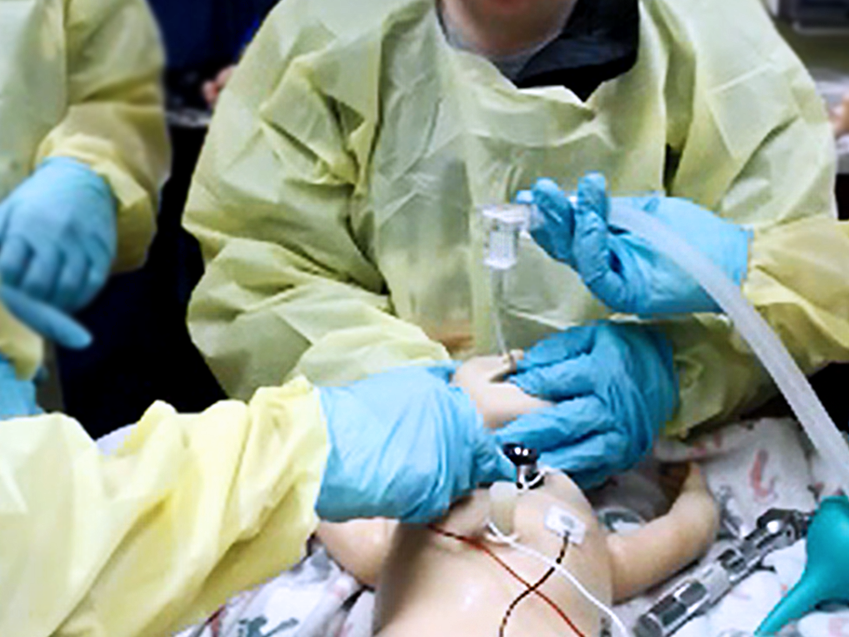
* If apnea/gasping → **positive pressure ventilation**
4. **Circulation**
* HR >100/min acceptable
* Check color, perfusion
5. **Umbilical Cord Care**
* Delayed clamping (1–3 mins)
* Clean cord stump, no antiseptic unless high-risk area
---
### **B. Early Postpartum Monitoring (1–24 hours)**
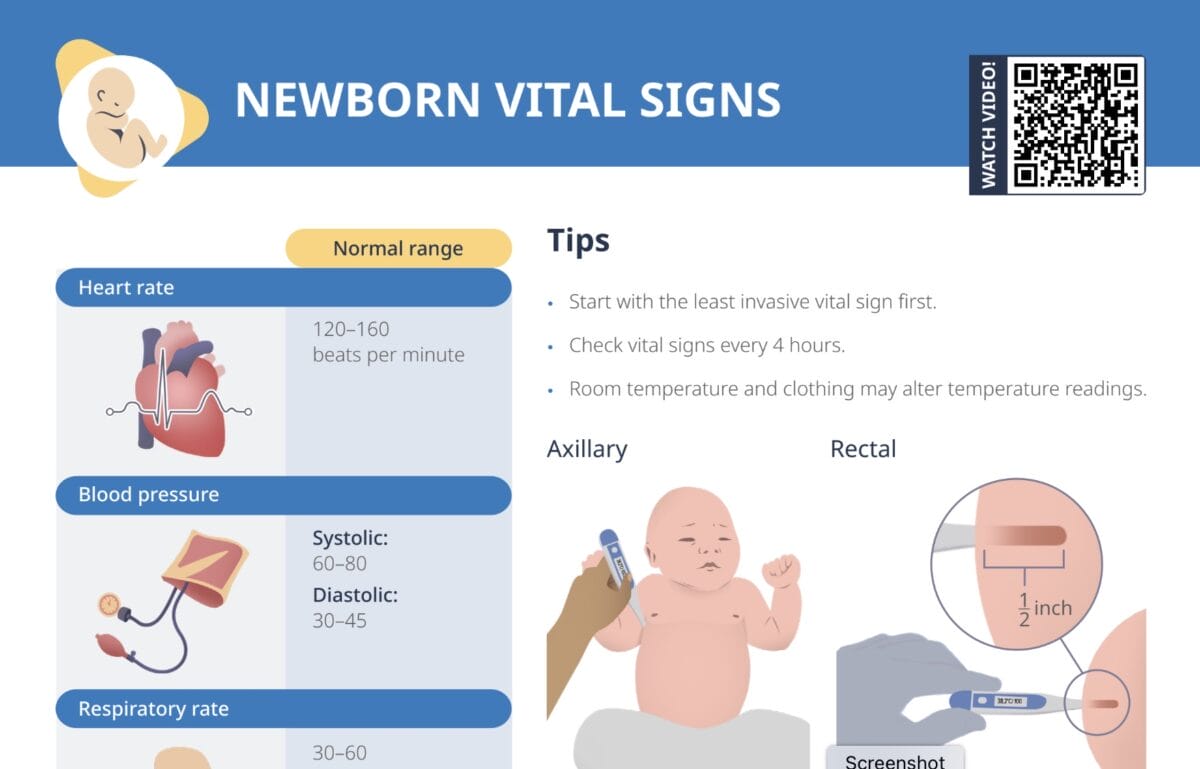
* **Vital signs every 30 mins × 2, then hourly × 2, then every 4 hrs**
* **Temperature:** 36.5–37.5°C
* **Respiratory rate:** 30–60/min
* **Heart rate:** 100–160/min
* **Check for:**
* Respiratory distress (grunting, flaring, retractions)
* Cyanosis
* Hypoglycemia (jitteriness, lethargy)
* **Feeding assessment:** first feed within 1 hour
* **Passage of urine (within 24 hrs) & meconium (within 24–48 hrs)**
---
### **C. Ongoing In-Hospital Monitoring (24–72 hours)**
* Weight (normal loss 5–10%)
* Jaundice screening (TcB/TSB)
* Breastfeeding adequacy (LATCH score)
* Congenital anomaly check
* Pulse oximetry screening for **critical congenital heart disease (CCHD)**
* Hearing screening
* Vitamin K prophylaxis
* Eye prophylaxis (as per protocol)
---
### **D. Post-Discharge Home Monitoring (up to 6 weeks)**
* Feeding frequency & weight gain
* Signs of dehydration
* Jaundice progression
* Infection signs (fever, poor feeding, umbilical redness)
* Sleep patterns
* Immunizations (as per schedule)
* Follow-up at **day 7, 14, 42**
---
## **4. Danger Signs Requiring Immediate Referral**
* Poor feeding / refusal to feed
* Lethargy, decreased activity
* Fast breathing (>60/min) or chest in-drawing
* Convulsions
* Hypothermia (<36°C) or fever (>38°C)
* Jaundice in first 24 hrs / deep yellow
* Umbilical redness extending to abdomen
* Not passing urine or stool
---
## **5. Documentation**
* **APGAR chart**
* **Vital signs chart**
* Feeding record
* Weight monitoring chart
* Neonatal resuscitation details (if any)
* Risk factors: maternal fever, PROM, meconium, GDM, IUGR
* Screening results (hearing, CCHD, bilirubin)
---
## **6. SEO-Optimized Title + Description + Keywords**
### **📌 Title (SEO-friendly)**
**Postpartum Fetal (Neonatal) Monitoring: Complete Guide to Newborn Assessment, Care & Risk Management**
### **📌 Meta Description**
A complete and concise guide to postpartum fetal (neonatal) monitoring, including APGAR scoring, vital signs assessment, thermoregulation, feeding evaluation, screening tests, danger signs, and newborn care protocols from birth to 6 weeks.
### **📌 Keywords**
postpartum fetal monitoring, neonatal monitoring, APGAR score, newborn care protocol, newborn assessment, postpartum newborn evaluation, neonatal vital signs, newborn danger signs, thermoregulation newborn, neonatal screening tests
---
If you'd like, I can also give you:
✔ **30 case scenarios with management**
✔ **20 hard MCQs in HTML/CSS/JS exam mode**
✔ **PDF or printable notes**
✔ **Mind map chart**
Would you like any of these?
I’ve kept it crisp + high-yield + suitable for notes, exams, SEO content.
---
# **Postpartum Fetal (Neonatal) Monitoring — Complete Reference**




---
## **1. Definition**
**Postpartum fetal monitoring** = **systematic assessment of the newborn from birth to 6 weeks**, ensuring adaptation to extra-uterine life and early detection of complications.
---
## **2. Objectives**
* Assess **transition from intrauterine → extrauterine life**
* Detect **respiratory, cardiovascular, metabolic instability**
* Prevent **hypothermia, hypoglycemia, sepsis**
* Ensure early or exclusive **breastfeeding**
* Identify congenital anomalies
* Guide **early intervention / referral**
---
## **3. Components of Monitoring**
### **A. Immediate Monitoring (0–60 minutes)**


1. **APGAR Score at 1 & 5 min**
* **A**ppearance
* **P**ulse
* **G**rimace
* **A**ctivity
* **R**espiration
* **Normal:** ≥7
* **<7:** repeat every 5 min up to 20 min
2. **Thermal Regulation**
* Dry, wrap, warm
* **Skin-to-skin contact (KMC)**
* Avoid hypothermia (<36.5°C)
3. **Airway & Breathing**
* Clear airway (only if obstructed)
* Observe spontaneous breathing
* If apnea/gasping → **positive pressure ventilation**
4. **Circulation**
* HR >100/min acceptable
* Check color, perfusion
5. **Umbilical Cord Care**
* Delayed clamping (1–3 mins)
* Clean cord stump, no antiseptic unless high-risk area
---
### **B. Early Postpartum Monitoring (1–24 hours)**
* **Vital signs every 30 mins × 2, then hourly × 2, then every 4 hrs**
* **Temperature:** 36.5–37.5°C
* **Respiratory rate:** 30–60/min
* **Heart rate:** 100–160/min
* **Check for:**
* Respiratory distress (grunting, flaring, retractions)
* Cyanosis
* Hypoglycemia (jitteriness, lethargy)
* **Feeding assessment:** first feed within 1 hour
* **Passage of urine (within 24 hrs) & meconium (within 24–48 hrs)**
---
### **C. Ongoing In-Hospital Monitoring (24–72 hours)**
* Weight (normal loss 5–10%)
* Jaundice screening (TcB/TSB)
* Breastfeeding adequacy (LATCH score)
* Congenital anomaly check
* Pulse oximetry screening for **critical congenital heart disease (CCHD)**
* Hearing screening
* Vitamin K prophylaxis
* Eye prophylaxis (as per protocol)
---
### **D. Post-Discharge Home Monitoring (up to 6 weeks)**
* Feeding frequency & weight gain
* Signs of dehydration
* Jaundice progression
* Infection signs (fever, poor feeding, umbilical redness)
* Sleep patterns
* Immunizations (as per schedule)
* Follow-up at **day 7, 14, 42**
---
## **4. Danger Signs Requiring Immediate Referral**
* Poor feeding / refusal to feed
* Lethargy, decreased activity
* Fast breathing (>60/min) or chest in-drawing
* Convulsions
* Hypothermia (<36°C) or fever (>38°C)
* Jaundice in first 24 hrs / deep yellow
* Umbilical redness extending to abdomen
* Not passing urine or stool
---
## **5. Documentation**
* **APGAR chart**
* **Vital signs chart**
* Feeding record
* Weight monitoring chart
* Neonatal resuscitation details (if any)
* Risk factors: maternal fever, PROM, meconium, GDM, IUGR
* Screening results (hearing, CCHD, bilirubin)
---
## **6. SEO-Optimized Title + Description + Keywords**
### **📌 Title (SEO-friendly)**
**Postpartum Fetal (Neonatal) Monitoring: Complete Guide to Newborn Assessment, Care & Risk Management**
### **📌 Meta Description**
A complete and concise guide to postpartum fetal (neonatal) monitoring, including APGAR scoring, vital signs assessment, thermoregulation, feeding evaluation, screening tests, danger signs, and newborn care protocols from birth to 6 weeks.
### **📌 Keywords**
postpartum fetal monitoring, neonatal monitoring, APGAR score, newborn care protocol, newborn assessment, postpartum newborn evaluation, neonatal vital signs, newborn danger signs, thermoregulation newborn, neonatal screening tests
---
If you'd like, I can also give you:
✔ **30 case scenarios with management**
✔ **20 hard MCQs in HTML/CSS/JS exam mode**
✔ **PDF or printable notes**
✔ **Mind map chart**
Would you like any of these?


























Comments (3)

Medical Student
This was incredibly helpful for my upcoming exam. Thank you!
Nursing Professional
Great explanation of the ECG changes in hyperkalemia!